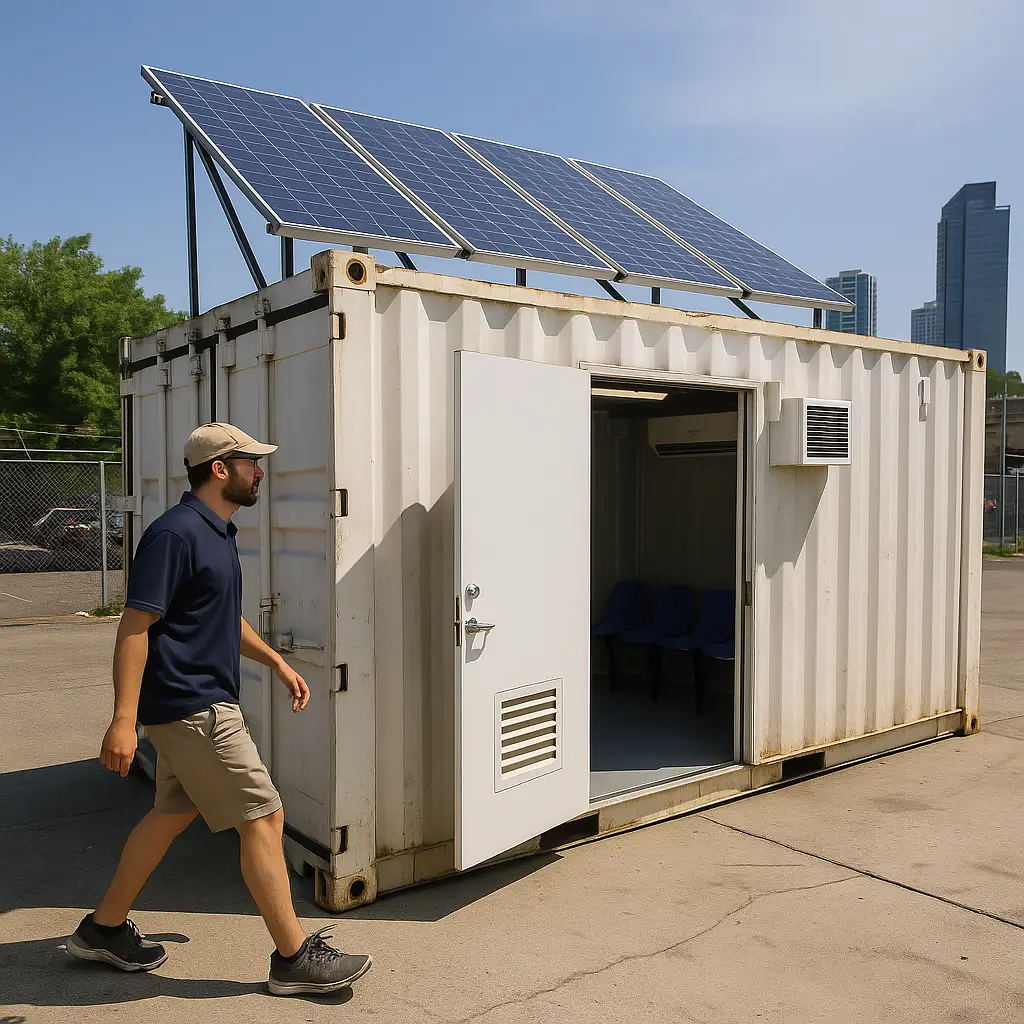
How shipping containers are stepping up as unexpected life-savers in Phoenix’s brutal heat
Phoenix, America’s sun-drenched capital, has blown through 110°F days so often it’s practically geological. To keep homeless residents safe, local innovators have repurposed shipping containers into solar-powered cooling centres—offering air-conditioned refuge when the desert acts like a furnace.
Staying Cool in a Crisis
- Reuse meets relief: Old containers once part of Arizona’s border barrier now house cool, shaded sanctuaries for those most at risk of heat-related illness.
- Solar smart: Solar panels power these units, making them mobile and off-grid—ideal for quick rollout to hotspots with high foot traffic or chronic homelessness.
- Rollout plans: Two centers are live in Phoenix, with plans to deploy eight more statewide—in prisons, Native lands, and high-heat zones. (Reuters coverage and local reporting)
Heat Is a Silent Emergency in Phoenix
Last summer’s heatwave was brutal—even deadly—with Maricopa County logging over 645 heat-related deaths, an alarming spike and wake-up call. City leadership has responded by deploying cooling centres, container shelters, and forming a dedicated heat preparedness office.
Phoenix’s Container-Based Innovation: Breaking It Down
| Feature | Details |
|---|---|
| Solar-powered pods | Sustainably retrofit old containers into cool lounges. |
| Mobile & flexible | Easily relocated to serve different neighbourhoods. |
| Rapid deployment | Quick builds—unlike bricks-and-mortar shelters. |
| Complementary approach | Part of a larger strategy including tree planting, cool pavements, and seasonal outreach. |
“Phoenix rolls out a new kid of cooling center. … It’s innovative improvising to help cool the city’s homeless.”
— CBS News report
Phoenix shows us that creativity can meet crisis head-on. If you’re in urban planning, climate adaptation, or homelessness support, this is a model worth exploring—scalable, clever, and undeniably cool.
Would you like a proposal template for deploying similar shelters in other heat-vulnerable cities or a visual layout of a container cooling hub ready to prototype?