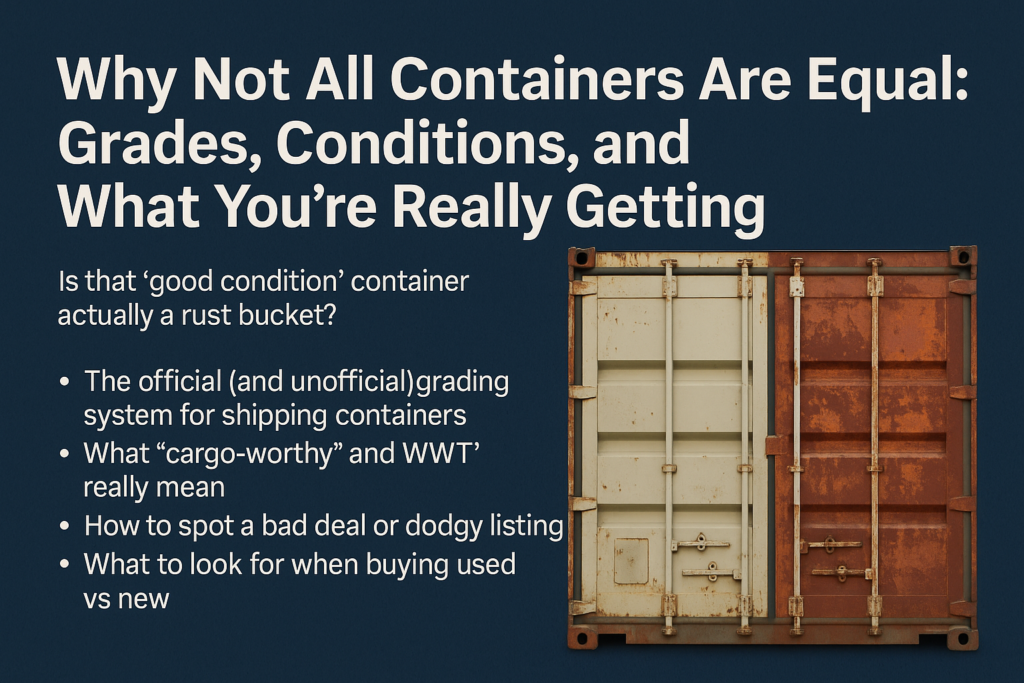
Is that “good condition” container actually a rust bucket?
Shipping Container Grades: You’re shopping for a container. You’ve found one that’s “Grade A, wind and watertight, lightly used.” It sounds great… until it arrives. One corner is bashed in, the door doesn’t seal, and you’re pretty sure it was last used to store feral goats.
Welcome to the wild west of container grading — a world where the term “good condition” is open to interpretation, and unless you know the lingo, you’re at risk of getting stitched up.
In this week’s blog, we’ll demystify container grades and condition reports:
- What the different grades (A, B, C, CW, WWT) actually mean
- Why two “cargo-worthy” containers can look VERY different
- What to ask before you buy
- When a bargain is too good to be true
- And how Containerlift ensures quality and transparency
Why Container Grades Matter
Whether you’re using a container for storage, shipping, conversion, or pop-up projects — its condition affects everything:
- Weather resistance
- Security
- Structural safety
- Resale value
Knowing what to expect helps you avoid nasty surprises, especially when buying used or refurbished units.
The Common Container Grades Explained
| Grade | What It Means | Good For… |
| New (One Trip) | Used only once from factory. Excellent condition. | High-end projects, conversions |
| Grade A | Structurally sound, minor cosmetic wear. | General use, site storage |
| Grade B | More signs of wear but still functional. | Budget storage, less visual appeal |
| Grade C | Heavy wear, dents, rust. Still usable. | Short-term, rough site storage |
| WWT | Wind and Watertight – doors seal, no holes. | Weatherproof ground storage |
| CW | Cargo Worthy – inspected and fit for shipping. | Sea freight, export use |
| As-Is | Sold with faults, likely needs repair. | Not recommended unless DIY-savvy |
⚠️ Note: There’s no universal regulation of these grades in the resale market — so ask for documentation or photos before buying.
WWT vs CW: What’s the Difference?
WWT (Wind and Watertight)
- Can’t have holes
- Doors must seal
- May not meet shipping standards
- Not always certified
CW (Cargo Worthy)
- Must pass inspection
- Suitable for sea transport
- May come with CSC plate
- Usually cleaner and less dented
🛠️ Tip: If it’s going overseas, ask for a CSC plate — that’s your legal ticket to sail.
Signs You’re Getting a Dud
- Price seems suspiciously low
- Seller won’t provide recent photos
- Vague terms like “used condition” with no grade
- No mention of CSC plate or wind/watertight test
- Bad paint job hiding deep rust or welded patches
Questions to Ask Before Buying
- What grade is the container?
- Is it WWT or CW certified?
- Can I see recent photos (interior + exterior)?
- Does it have a valid CSC plate?
- Has it been repainted or repaired?
- Are doors and seals in working order?
- What’s the floor condition like?
- Can you guarantee delivery with suitable offload?
- Are there any delivery restrictions or extra charges?
The Containerlift Difference
When you buy from or deliver through Containerlift, you get:
✅ Transparent condition reports
✅ Clear grading and full disclosure
✅ High-res photos pre-dispatch
✅ Container options to suit your needs (storage, conversion, shipping)
✅ Delivery AND offload (sideloaders, flatbeds, HIABs)
✅ Support from real humans who’ve seen it all
No nasty surprises. No rust buckets pretending to be ‘Grade A’.
Real-World Scenario: The “Bargain” That Wasn’t
Client: Farmer in Wales, buying a container for on-site feed storage
Advertised Grade: “Excellent condition”
Actual Condition: One door jammed, floor rotten, heavy rust
Outcome: Refused delivery, lost deposit
Fix: Bought WWT-certified unit through Containerlift
Result: Delivered with sideloader, used same day
Quote:
“It was like comparing a knackered old shed with a decent garage. Should’ve gone with Containerlift first.”
When New (One-Trip) Containers Are Worth It
- High-end visual conversions (e.g. offices, cafes, shops)
- Containers used at public-facing events
- When you need decades of service with minimal upkeep
- If you don’t want the hassle of patching up rust or dents
Yes, you’ll pay more. But you’ll also sleep better at night.
What Affects Container Condition?
- Saltwater exposure – accelerates rust
- Poor stacking/storage – causes damage to roof or base
- Heavy handling – dented corners, twisted doors
- Use history – toxic or odorous cargo? You don’t want it
- Factory origin – newer builds tend to last longer
Legal & Safety Notes
- CSC plates are mandatory for shipping containers on vessels
- Planning permission may apply if using long-term on land
- Modifications (e.g. cutting out sides) may void structural warranties
- Always check local regulations if placing on-site near public areas
“You wouldn’t buy a car without checking under the bonnet. Don’t buy a container without lifting the lid — or at least looking at the photos.”
Ready to get the right container for the job — not a rusty headache?
Whether it’s one-trip, WWT, or custom-modified, we’ve got stock, vehicles, and the know-how to deliver exactly what you need.
👉 Speak to Our Sales Team
20ft vs 40ft vs 45ft Container Sizes Which One Do You Need?