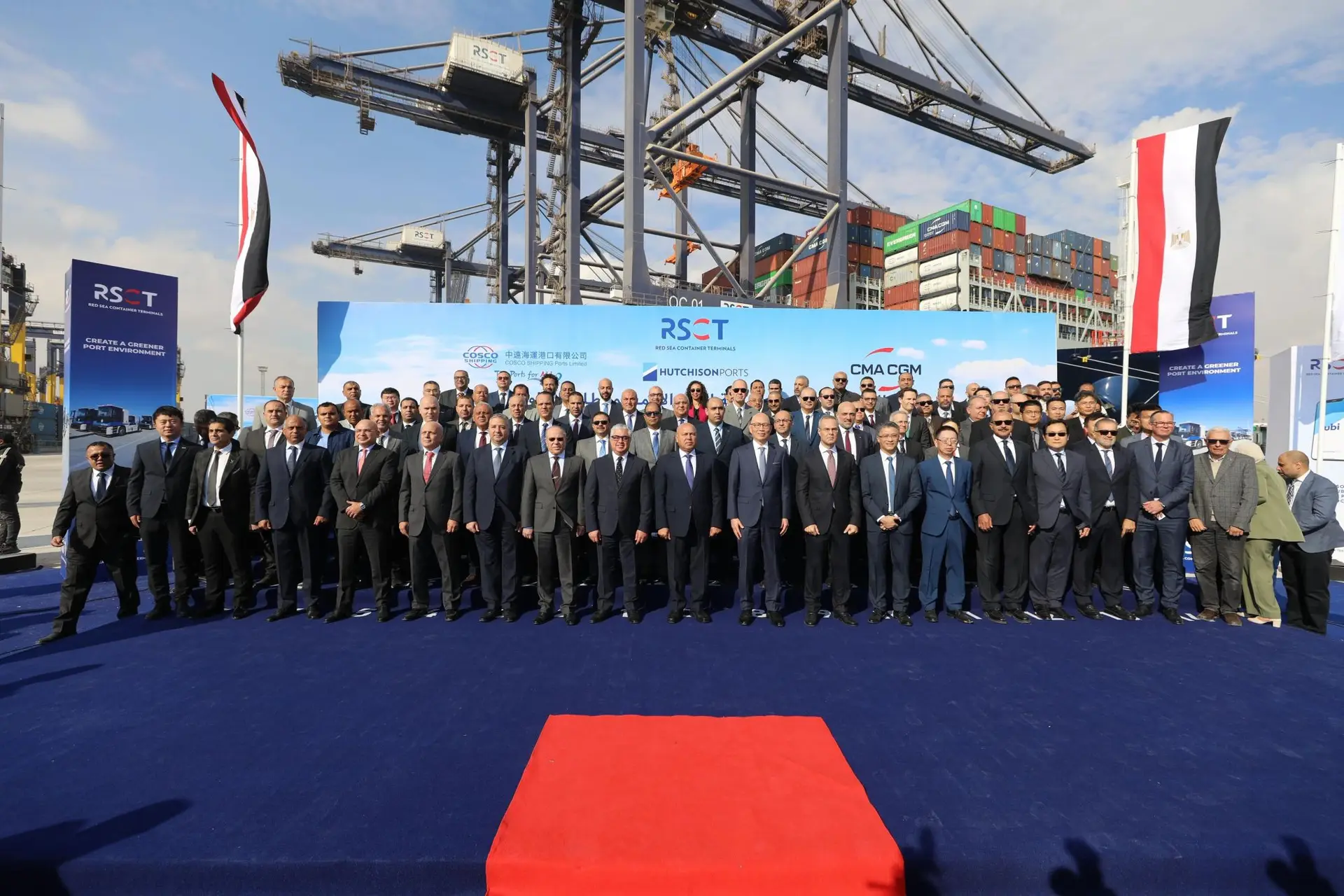
A New Era of Automated Logistics on Egypt’s Red Sea Coast
Egypt has taken a major step toward becoming one of the region’s most influential logistics hubs with the launch of trial operations at the Red Sea Container Terminal (RSCT) in Sokhna Port. After years of planning and multi-national investment, the terminal has now welcomed its first vessel—the CMA CGM Helium—marking the beginning of a new chapter for containerised trade in the region.
A Strategic Project With Global Backing
RSCT is operated by a powerful international consortium led by Hutchison Ports, CMA CGM, and COSCO Shipping—three giants of the global maritime industry. Their combined expertise has shaped a terminal designed to set new benchmarks for efficiency, automation, and cargo throughput across the Red Sea corridor.
The facility is a key pillar in Egypt’s ambition to modernise its ports, expand industrial capacity, and position itself as the natural gateway between Asia, Africa, and Europe.
First Vessel Marks the Start of Trial Operations
The arrival of the CMA CGM Helium from Singapore was more than a symbolic milestone—it was the first real-world test of the terminal’s advanced systems. As cranes whirred to life and yard equipment sprang into action, engineers and operators from multiple partner organisations assessed the performance of every moving part during these crucial early stages.
Trial operations allow the terminal to fine-tune its digital platforms, optimise workflows, and ensure all equipment performs at peak levels before commercial scale-up.
Cutting-Edge Automation at the Core
What sets RSCT apart from traditional regional terminals is its high level of automation and smart technology integration. The facility is equipped with:
- Six ship-to-shore (STS) cranes, optimised for handling ultra-large container vessels
- 18 automated rubber-tyred gantry (RTG) cranes, used to streamline operations in the yard
- A sophisticated Terminal Operating System (TOS) providing real-time tracking of containers
- GPS-enabled equipment and RFID technology for improved accuracy and speed
- Energy-efficient technologies designed to reduce emissions and support sustainable port operations
This combination of automation and digital infrastructure aims to minimise human error, reduce turnaround times, and provide shipping lines with a more predictable operational experience—an increasingly valuable asset in today’s disrupted global supply chain.
Sokhna’s Growing Role in the Red Sea and Beyond
The launch of RSCT strengthens Egypt’s broader Sokhna–Alexandria transport and logistics corridor, which links the Red Sea to the Mediterranean. This east–west route has been positioned as a competitive alternative to transshipment centres further south or east, offering direct access to manufacturing zones and industrial districts across the country.
With Red Sea shipping flows expected to stabilise and expand in the coming years, the terminal’s location is strategically significant. It provides major carriers with a streamlined, modern port option in a region that has faced periodic disruptions but continues to be essential for global trade.
Egyptian Leadership Highlights the Terminal’s Importance
During the inauguration, Kamel Al-Wazir, Egypt’s Deputy Prime Minister for Industrial Development and Minister of Industry and Transport, toured the site and emphasised the facility’s impact on national economic development. He described RSCT as a “transformative project” that enhances Egypt’s maritime competitiveness while supporting future industrial expansion along the Red Sea coast.
A Gateway to Future Growth
As RSCT progresses through its trial phase, industry analysts will be watching closely. The success of this terminal could influence future shipping route decisions, encourage further foreign investment, and strengthen Egypt’s position as a logistical powerhouse.
With its mix of automation, global partnerships, and strategic location, the Red Sea Container Terminal is poised to become one of the region’s most important maritime assets—ushering in a smarter, faster, and more resilient era of cargo handling in the Red Sea.