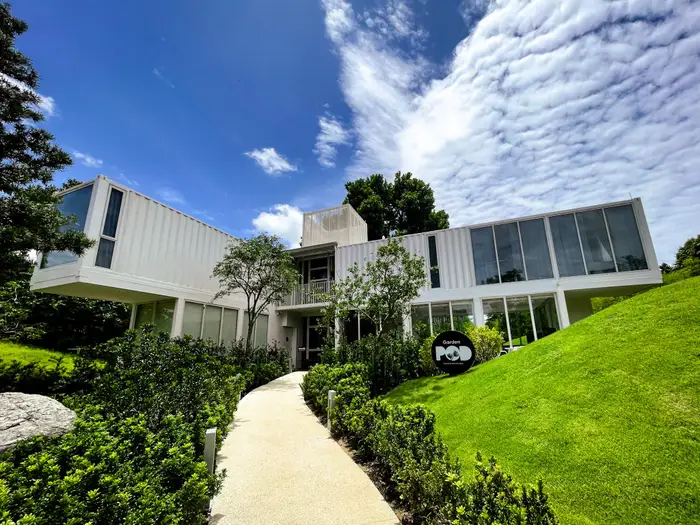
Question: How did steel shipping containers become the unlikely poster child for affordable luxury hotels and resorts?
Luxury used to mean marble lobbies, crystal chandeliers, and room rates that quietly ruin your weekend before you’ve even checked in. But somewhere between rising construction costs, sustainability pressure, and travellers getting bored of beige hotel rooms, the hospitality industry had a moment of clarity. What if luxury didn’t need to be massive, permanent, or eye-wateringly expensive?
Enter the container hotel — a concept that sounds budget, temporary, and vaguely industrial, yet somehow delivers boutique aesthetics, Instagram-friendly interiors, and nightly rates that don’t require a small loan. Once the backbone of global trade, shipping containers are now being reborn as design-led hotel rooms, eco-resorts, beach retreats, and urban pop-ups. And they’re doing it at a fraction of the cost and time of traditional builds.
For developers, containers offer speed, modularity, and cost control. For guests, they offer something refreshingly different: compact luxury, clever design, and the quiet satisfaction of staying somewhere that doesn’t pretend it was built in 1890 when it clearly wasn’t. From desert lodges to coastal retreats and city-centre short stays, container hotels are redefining what “luxury” actually means in 2026.
This article explores why container hotels and resorts are booming, how they deliver high-end experiences on realistic budgets, where they work best, and why this trend is less gimmick — and more long-term shift.
What Is a Container Hotel (And Why It Works)?
A container hotel uses converted shipping containers — typically 20ft or 40ft units — as individual guest rooms or modular suites. These containers are insulated, fitted out, plumbed, wired, glazed, and finished to hospitality standards. Once complete, they’re stacked, arranged, or spaced across a site to form a hotel or resort layout.
Why does this work so well?
- Containers are structurally strong, designed to stack and survive oceans.
- They’re modular, making expansion or reconfiguration simple.
- They’re cost-predictable, avoiding the usual construction surprises.
- They’re fast — months, not years, from concept to opening.
The real magic, though, happens in the design phase. Clever architects use high ceilings, floor-to-ceiling glazing, and premium finishes to make guests forget they’re sleeping in something that once carried bananas across the Atlantic.
Luxury Without the Luxury Price Tag
Traditional hotel construction is brutally expensive. Land prep, foundations, materials, labour, weather delays — it all adds up fast. Container hotels sidestep much of this.
Where the Savings Come From
- Lower build costs: Containers provide a ready-made structural shell.
- Reduced labour time: Off-site fabrication speeds everything up.
- Minimal foundations: Often pads or screw piles instead of full slabs.
- Scalable investment: Build 6 rooms now, add 6 more later.
This cost efficiency allows developers to redirect budget into the things guests actually notice: beds, bathrooms, lighting, views, and finishes. You might save on concrete, but you’ll spend on rainfall showers, underfloor heating, and interiors that feel intentional rather than improvised.
Why Guests Love Container Hotels
Travellers aren’t stupid. They know when they’re paying for fluff. Container hotels appeal because they offer:
- Unique stays (no two layouts are identical)
- Eco-credibility without the preachiness
- Design-led interiors instead of generic hotel décor
- Great locations that would be uneconomical for traditional builds
Container hotels feel personal. They feel considered. And crucially, they feel modern — which is exactly what today’s travellers expect.
Perfect Locations for Container Resorts
Container hotels thrive in places where traditional construction struggles or costs spiral.
Coastal & Rural Retreats
Clifftops, beaches, forests, vineyards. Containers can be delivered, installed, and left largely untouched by heavy groundwork.
Urban Pop-Ups
Temporary land use in cities becomes viable. A container hotel can operate for 5–10 years, then relocate.
Eco-Tourism Sites
Low impact, modular builds suit conservation-minded locations perfectly.
A standout urban example is Boxpark Shoreditch, which proved long ago that containers aren’t “temporary eyesores” — they’re legitimate commercial architecture.
Sustainability: Not Just a Buzzword This Time
Container hotels tick sustainability boxes that guests increasingly care about:
- Reuse of existing materials
- Reduced construction waste
- Smaller building footprints
- Energy-efficient insulation and systems
- Off-grid compatibility (solar, rainwater, greywater)
Unlike some greenwashing exercises, container hotels often genuinely reduce environmental impact — especially when paired with modern insulation and renewable energy setups.
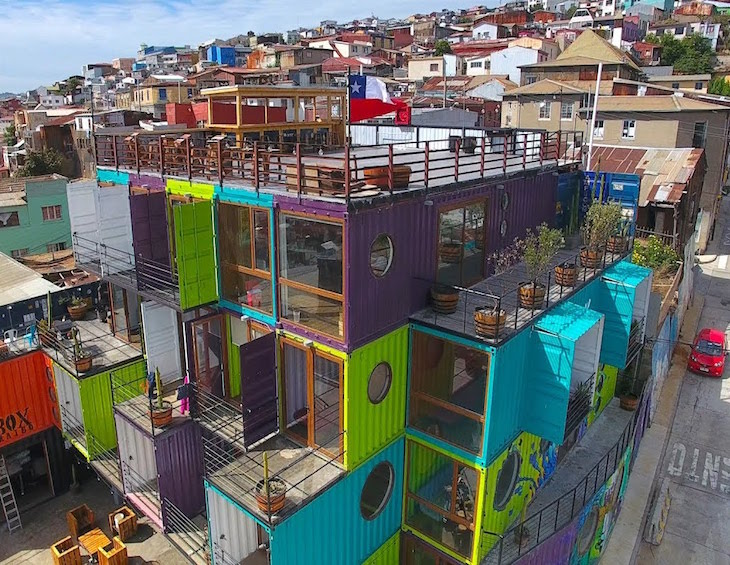
Design: From Industrial to Indulgent
Let’s be clear: luxury container hotels don’t look like containers on the inside.
Design features often include:
- Full-height glazing
- Timber, stone, or polished concrete finishes
- Hotel-grade bathrooms
- Bespoke furniture
- Private decks, hot tubs, or plunge pools
High-cube containers add extra ceiling height, eliminating the “boxy” feel altogether. The result is spaces that feel boutique, not budget.
Operational Advantages for Owners
From an operator’s perspective, container hotels are refreshingly logical.
- Faster ROI due to lower upfront costs
- Easier maintenance (individual units can be refurbished off-site)
- Simplified expansion
- Reduced downtime
If one unit needs work, it doesn’t shut down the entire hotel. That’s operational sanity right there.
Case Study: Boutique Container Resort in Southern Europe
A small coastal developer wanted to create a 12-room luxury resort without destroying the landscape or their budget. Traditional builds were quoted at over £2.5 million. Instead, they opted for high-cube container suites.
The Results:
- Build time: 7 months
- Total cost: under £1.4 million
- Average nightly rate: €180
- First-year occupancy: 78%
Each container suite featured a sea-facing glass wall, private terrace, and high-end bathroom. Guests regularly commented that they “forgot it was a container within minutes”. The project broke even in under four years — unheard of in traditional hospitality development.
“Luxury isn’t about size or price anymore — it’s about experience, design, and not wasting money on things guests don’t care about.”
The Future of Budget-Smart Luxury
Container hotels aren’t replacing five-star resorts. They’re replacing boring hotels. As travellers demand flexibility, sustainability, and originality, container-based hospitality will continue to grow — not as a novelty, but as a smart business model.
This isn’t about cutting corners. It’s about cutting waste.
Thinking about launching a hotel, resort, or short-stay accommodation without blowing the budget? Container-based hospitality could be your smartest move. Explore what’s possible before you pour concrete.