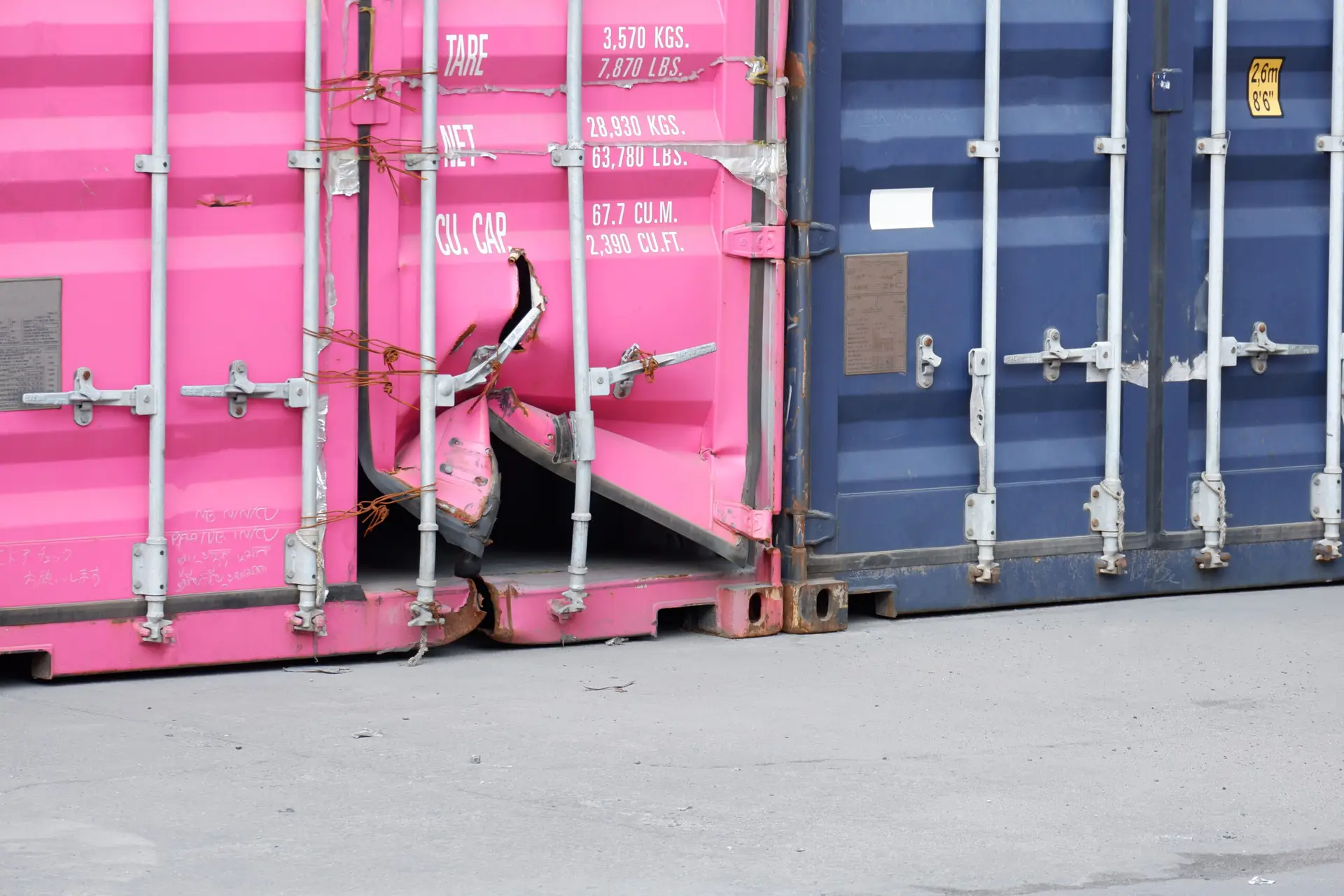
Understanding Responsibility, Risk & Insurance in Container Transport
When your container is rolling down the motorway or being lowered onto your site, who’s actually responsible if something goes wrong?
It’s a question most people don’t ask until they absolutely need to.
Container delivery insurance isn’t the most glamorous topic in logistics. No one gets excited about policy wording. But when you’re moving steel boxes worth thousands of pounds – often filled with equipment, stock or high-value goods – knowing who carries the risk at each stage is essential.
At Cubus Containers, we move containers across the UK and Europe every week using specialist sidelifter lorries. We’ve seen pristine deliveries, tight sites, complex lifts, and the occasional curveball. The difference between a smooth claim and a financial headache? Understanding responsibility before the wheels start turning.
Let’s break down container delivery insurance properly – without the jargon, without the guesswork, and without the assumption that “someone else must be covered”.
The Big Question – When Does Responsibility Change Hands?
The moment responsibility transfers is the single most important detail in container delivery.
In simple terms, responsibility usually shifts at specific milestones:
- Before collection
- During transit
- During lifting/unloading
- Once positioned on site
- After sign-off
Each stage carries different risk.
Before Collection
If you own the container and it’s sitting on your premises, it’s your responsibility. That means your insurance (if you have it) covers damage, theft or loss.
If Cubus Containers are collecting a container from a third party on your behalf, clarity matters. Is it empty? Loaded? Who insured the goods inside?
Assumptions are expensive.
What Insurance Does a Container Haulier Carry?
A professional container transport company should carry several layers of protection.
At a minimum, this includes:
Goods in Transit Insurance
This covers damage to the container (or sometimes its contents) while being transported.
However – and this is critical – goods in transit cover is often limited. There are caps. There are exclusions. There are conditions.
It does not mean “unlimited cover for anything and everything inside”.
Public Liability Insurance
If a container causes injury or property damage during delivery – for example, accidental damage to a boundary wall – public liability insurance is what responds.
Motor Insurance
Standard commercial vehicle cover protects the lorry and third-party road users.
Operator’s Liability (Depending on Terms)
Some hauliers operate under specific transport conditions that limit liability per tonne.
That’s why it’s essential to ask:
- What is the maximum cover per load?
- Does it cover container contents?
- Are there exclusions for specific goods?
Professional operators won’t be offended by these questions. They’ll respect them.
Does the Haulier Insure the Contents?
Short answer?
Usually not in full.
Most container transport insurance covers the container itself during transit, but not necessarily the high-value goods inside.
If you’re transporting:
- Machinery
- Retail stock
- Electronics
- Specialist equipment
- Personal belongings
You may need separate cargo insurance.
If you assume the haulier covers £150,000 worth of stock inside a container and the policy limit is £25,000 per load, that gap becomes your problem.
What About During the Lift?
This is where specialist equipment like a sidelifter lorry changes the game.
When a container is lifted off a vehicle and positioned onto your site, there’s a brief window of elevated risk.
Key questions:
- Is the ground suitable?
- Is there overhead clearance?
- Are there underground services?
- Is access stable and level?
If site conditions cause damage – for example, unstable ground leading to tilting – responsibility can become complex.
Professional operators will conduct risk assessments and ask for site photos in advance. That protects everyone.
With a sidelifter, containers are self-loaded and offloaded without needing a separate crane. That reduces variables, reduces third-party involvement, and typically lowers risk exposure compared to crane-assisted deliveries.
Fewer moving parts. Fewer insurers. Fewer arguments.
Who Is Responsible If the Container Is Damaged?
Responsibility depends on when and how the damage occurred.
Scenario 1: Damage During Road Transit
If caused by driver negligence or vehicle failure, the haulier’s goods in transit insurance may respond.
If caused by an unavoidable third-party road collision, it may fall under motor insurance.
Scenario 2: Damage During Offloading
If caused by operator error, that’s typically the haulier’s responsibility.
If caused by unsafe site conditions not disclosed in advance, responsibility may shift.
Scenario 3: Damage After Sign-Off
Once the container is placed and signed for, responsibility generally transfers to the site owner.
This is why inspections matter. Always check the container before signing.
What About Delays?
Insurance does not usually cover financial losses caused by delivery delays unless explicitly stated.
Weather delays.
Port congestion.
Traffic incidents.
Access problems.
These are operational risks, not always insurable events.
Clear communication and planning reduce exposure more than any policy document.
Do You Need Your Own Insurance?
If you own the container or the goods inside it, the answer is almost always yes.
You should consider:
- Cargo insurance
- Property insurance (once placed on site)
- Business interruption cover (if relevant)
- Contractual liability cover
Especially if the container holds business-critical assets.
The smartest operators layer protection rather than relying on a single policy.
International vs Domestic Container Delivery
When containers move internationally, insurance complexity increases.
Freight forwarding terms often reference trade conditions that determine risk transfer points. Inland UK transport is simpler, but clarity is still essential.
Always confirm:
- Who arranges insurance?
- At what value?
- From which point to which point?
- Under what liability limits?
One email confirmation before transport can prevent months of dispute later.
Why Professional Transport Reduces Insurance Risk
Insurance is reactive.
Professionalism is preventative.
Using specialist container hauliers with:
- Experienced operators
- Modern sidelifter equipment
- Proper load restraint systems
- Pre-delivery site checks
reduces the likelihood of claims in the first place.
At Cubus Containers, deliveries are planned with access assessments and proper load security. That reduces uncertainty. And uncertainty is what insurance companies dislike most.
The Most Common Mistakes People Make
- Assuming the haulier covers everything
- Not declaring container contents
- Failing to inspect on delivery
- Ignoring site preparation
- Not checking liability limits
Insurance disputes rarely start with dramatic accidents.
They start with misunderstandings.
A Practical Example
Let’s say you’ve purchased a 40ft container filled with £80,000 worth of equipment.
Cubus Containers collect and transports it using a sidelifter.
During transit, a third-party vehicle collides with the lorry.
The container is damaged.
Some internal equipment shifts.
If the haulier’s goods in transit cover is limited to £30,000 per load, you could be significantly exposed unless you arranged supplementary cargo insurance.
Now imagine the container arrives safely, but the site is uneven. During offload, it settles slightly and twists.
If ground conditions were not suitable or not declared, responsibility may not sit entirely with the transport operator.
Clarity upfront protects both sides.
How to Protect Yourself Before Delivery
Before your container moves, confirm:
- Written confirmation of insurance cover limits
- Whether contents are covered
- Site access suitability
- Ground bearing capacity
- Clear delivery instructions
- Who signs off and when
Five minutes of due diligence is cheaper than legal advice later.
Why Sidelifter Deliveries Reduce Complications
Traditional crane offloads introduce additional contractors, additional liability layers, and additional insurers.
A self-loading sidelifter:
- Controls the lift from vehicle to ground
- Minimises third-party involvement
- Reduces handling
- Shortens exposure time
Fewer touchpoints mean fewer risk transfer arguments.
That simplicity often matters more than people realise.
Final Thoughts – Insurance Is About Clarity, Not Fear
Container delivery insurance isn’t about expecting disaster.
It’s about knowing exactly where responsibility begins and ends.
When you understand:
- Who insures what
- When liability transfers
- What limits apply
- What exclusions exist
you move from assumption to control.
And control is what keeps projects running smoothly.
Need Container Transport Done Properly?
If you’re arranging container delivery across the UK or Europe, speak to Cubus Containers before the move happens.
We’ll explain:
- How delivery works
- What insurance applies
- What you should arrange yourself
- How sidelifter transport reduces risk
No surprises. No grey areas. Just professional container transport backed by experience.
Contact Cubus Containers today and move your container with confidence.