Is your container about to turn into a steel oven now the sun’s finally shown up?
Container climate control: Let’s be honest… the UK gets about three weeks of “summer” and somehow your shipping container manages to become hotter than a pizza oven in Naples.
Brilliant.
The irony? Most people worry about winter. Frost. Ice. Frozen fingers.
But the moment temperatures creep up, that innocent-looking steel box turns into a heat trap — and suddenly your tools, stock, equipment (or staff) are slowly cooking.
Here’s the problem: shipping containers are made of steel — and steel doesn’t “manage” temperature… it amplifies it.
So when the weather warms up, your container doesn’t just get warm. It overheats fast.
And if you’re storing anything remotely sensitive — food, chemicals, electronics, or even just expensive gear — you’ve got a problem.
That’s where climate control comes in. And not just any climate control — the right mix of insulation, airflow, positioning, and refrigerated solutions.
Because if you get this wrong, you’re not just uncomfortable…
You’re losing money.
Why Containers Overheat So Quickly in UK Weather
Steel + Sun = Bad Decisions
Shipping containers are brilliant at many things.
Temperature regulation? Not one of them.
Steel is a highly efficient heat conductor, meaning it absorbs external heat quickly and transfers it directly inside.
Result?
- Freezing in winter
- Boiling in summer
- Miserable all year round
Without intervention, you’re essentially using a giant metal radiator pointed at the sun.
UK Weather Isn’t Mild Anymore
Gone are the days of “lukewarm summers”.
We’re now seeing:
- Higher peak temperatures
- Longer warm spells
- Increased humidity
Which means containers are now facing:
- More overheating risk
- More condensation cycles
- More internal damage
And if you think “it’s only England”… your container doesn’t care.
The Real Cost of Ignoring Climate Control
Let’s not sugar-coat this.
Ignoring climate control isn’t just uncomfortable — it’s expensive.
What Actually Goes Wrong
- Stock warps, melts or degrades
- Electronics fail
- Moisture builds → mould & rust
- Internal “container rain” damages everything
Yes… container rain is a real thing.
And it’s exactly as ridiculous as it sounds.

Productivity Drops (Fast)
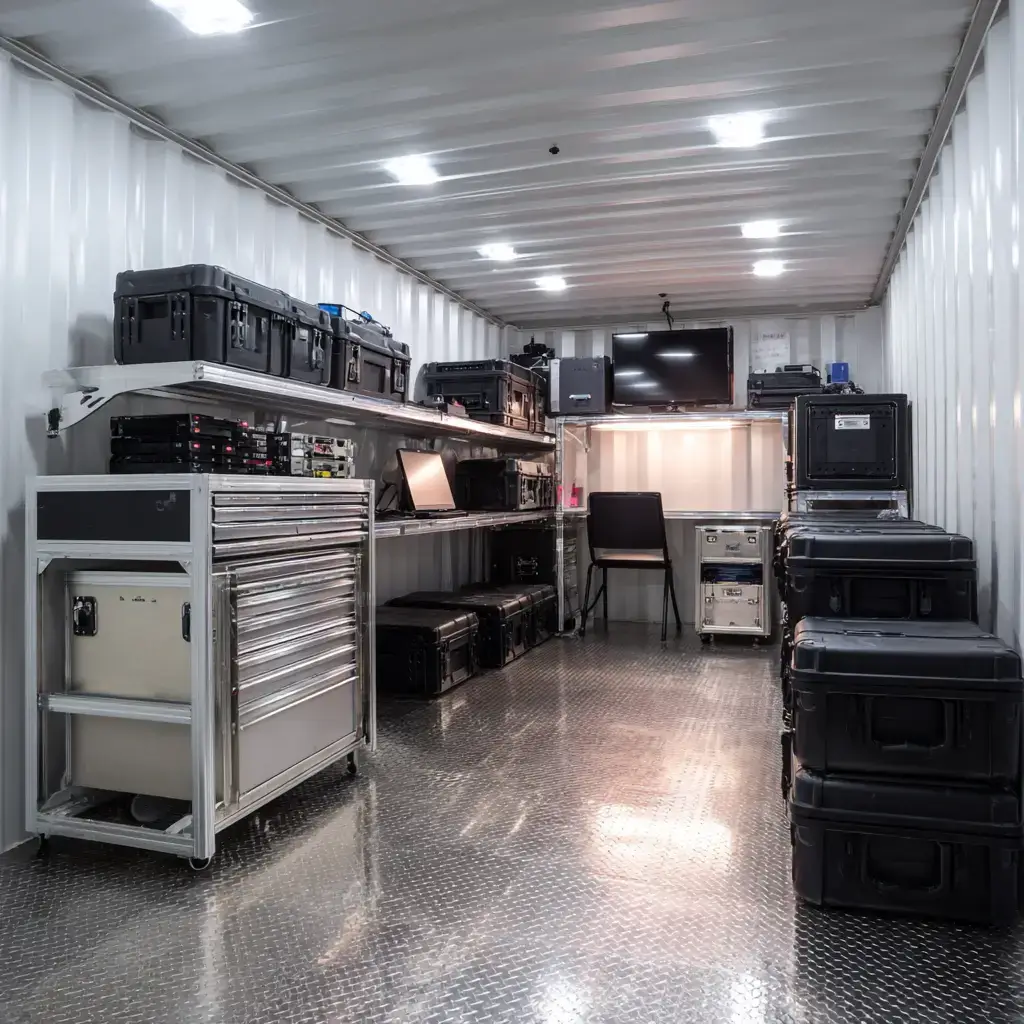
Using a container as an office or workspace?
Good luck working in a 35°C metal box.
Even basic airflow issues can trap hot air at ceiling level, turning your container into a slow cooker.
The Smart Solution — Refrigerated Containers
This is where things get serious.
If you’re storing temperature-sensitive goods, you don’t “improve” a container…
You upgrade it.
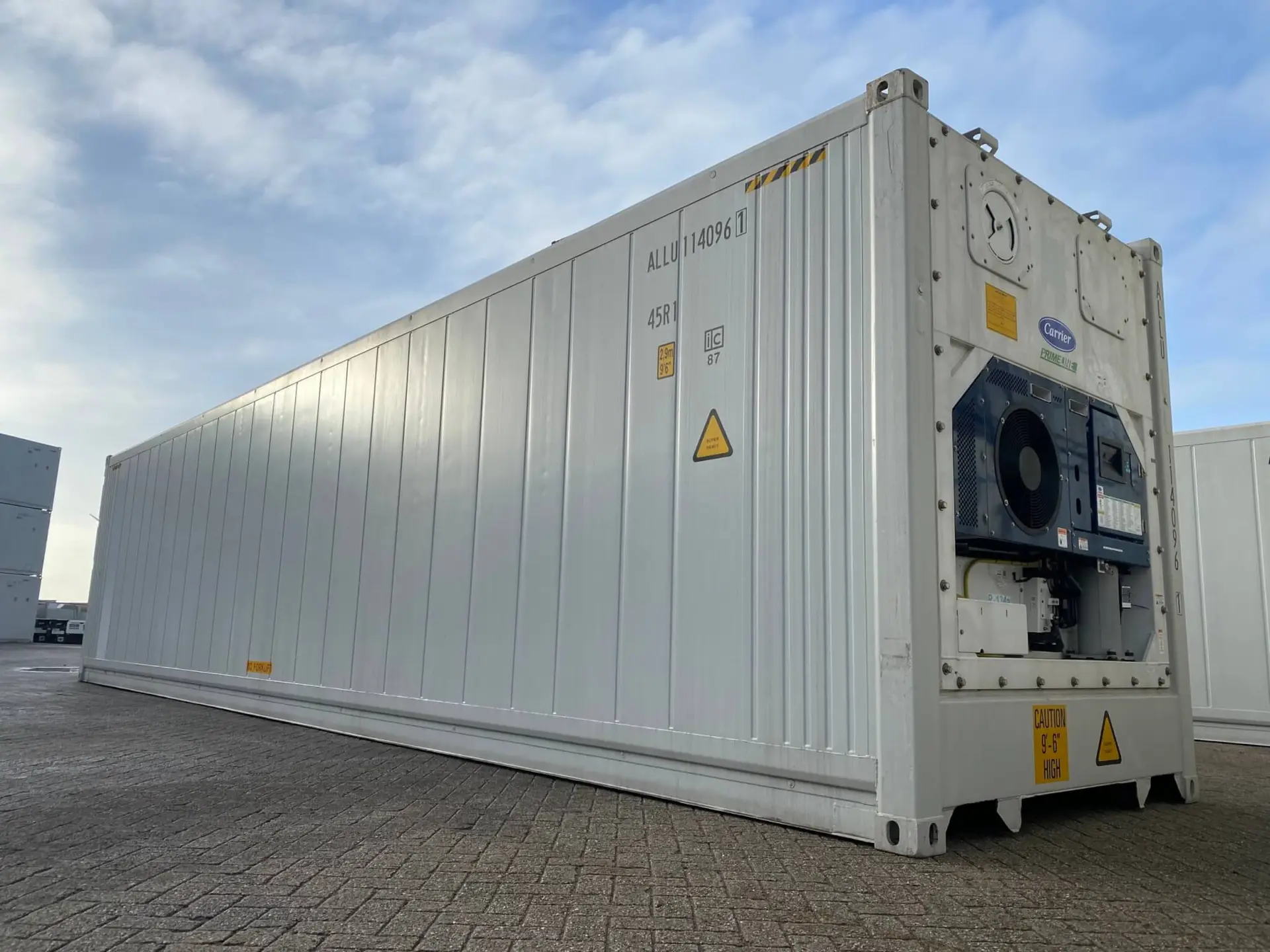
What Is a Refrigerated Container?
A refrigerated (reefer) container is designed to:
- Maintain controlled internal temperatures
- Handle extreme external conditions
- Keep goods stable regardless of weather
They’re used globally for:
- Food storage
- Pharmaceuticals
- Chemicals
- Events and catering
Because when temperature matters…
Guesswork isn’t an option.
Why They’re Perfect for UK Summer
Even a mild UK summer can push internal container temps well beyond safe limits.
Refrigerated containers:
- Maintain consistent internal climate
- Eliminate overheating risk
- Protect high-value stock
Simple.
Best Practices for Container Climate Control (Without Going Full Freezer)
Not everyone needs refrigeration.
But everyone needs a plan.
1. Insulation — The Non-Negotiable
Let’s be clear:
If your container isn’t insulated, you don’t have climate control. You have a problem.
Insulation creates a thermal barrier that:
- Reduces heat transfer
- Stabilises internal temperature
- Prevents condensation
Without it, your container is “at the mercy of the weather”.
2. Choose the Right Insulation Type
Here’s your quick breakdown:
Spray Foam (Best Performance)
- Seamless coverage
- Acts as vapour barrier
- Highest thermal efficiency
Rigid Foam Boards (Budget Option)
- Good insulation
- Requires proper sealing
Mineral Wool / Blanket
- Cheap
- Needs framing and vapour barrier
Get this wrong, and you’ll still get heat — just slightly delayed.
3. Ventilation — The Silent Hero
You can insulate all you like…
But without airflow, heat builds up anyway.
Best practices:
- Install vents at opposite ends
- Create cross-flow airflow
- Use roof vents for heat extraction
Because hot air rises… and if it can’t escape, it stays.
4. Positioning — Free Cooling (Yes, Really)
Before you spend a penny…
Move the container.
- Avoid direct sunlight
- Use shade from buildings or trees
- Add overhead coverings if needed
Even a simple tarp can reduce internal heat significantly.
5. Air Conditioning — When You Need Comfort
If humans are involved…
You need AC.
Especially for:
- Site offices
- Workshops
- Retail units
Because sweating over spreadsheets isn’t a productivity strategy.
UK Weather Zones — What You Need to Consider
The UK isn’t one climate.
It’s several.
South England (Hotter, Drier Summers)
- Higher solar gain
- Greater overheating risk
- Insulation + shading critical
North England & Scotland (Cooler, Damp)
- Less heat, more moisture
- Condensation becomes the main enemy
- Vapour barriers essential
Coastal Areas (Wind + Humidity)
- Salt air + moisture
- Higher corrosion risk
- Ventilation + anti-condensation coatings needed
Case Study — From Storage Box to Climate-Controlled Asset
A UK events company needed temporary cold storage for summer festivals.
Originally?
They used standard containers.
Result:
- Stock spoiled
- Ice melted
- Losses mounted
Solution:
They switched to refrigerated containers.
Outcome:
- Consistent temperature
- Zero spoilage
- Increased capacity to take on larger events
The kicker?
They didn’t just “solve a problem”…
They unlocked a new revenue stream.
“A shipping container without climate control isn’t storage — it’s a gamble with your inventory.”
Final Thoughts — Stop Treating Containers Like Boxes
Here’s the brutal truth (you knew it was coming):
A container isn’t just a box.
It’s an environment.
And right now, that environment is about to get hotter.
You’ve got two choices:
- Hope for cloudy weather (bold strategy)
- Or control the climate properly
One makes you lucky.
The other makes you professional.
Thinking about upgrading your container for summer?
Explore refrigerated and climate-controlled solutions here:
👉 https://cubuscontainers.co.uk/special-purpose-containers/refrigerated-containers/
Or better yet — speak to someone who actually understands how containers behave in the real world.