Which Special Purpose Container Do You Actually Need?

Need a special purpose container, or are you about to buy a very expensive metal box with the wrong doors on it?
That, in wonderfully blunt terms, is the problem. Most people start their container search by asking for a size. They ask for a 20ft container, a 40ft container, a high cube, or “something secure for the yard”. Sensible enough. But with special purpose containers, size is only one piece of the puzzle. The more important question is: what job does the container actually need to do?
A standard shipping container is brilliant when the brief is simple: dry, secure, robust storage. But business is rarely that tidy. You may need to load machinery from above, access stock from both ends, keep goods chilled, open the full side for forklifts, separate two teams, protect seasonal stock, or create a temporary operational hub without building a small bungalow in the car park. This is where specialised containers stop being a nice idea and start being the difference between smooth operations and daily swearing in hi-vis.
Cubus Containers supplies standard and specialised containers nationwide, including refrigerated containers, tunnel containers, open top containers and side opening containers, with new and used options available for sale or hire. The trick is not simply choosing the most impressive-sounding unit. The trick is choosing the container that removes the most friction from your actual working day. Because the wrong container will still be strong, secure and weather-resistant. It will just quietly annoy everyone until somebody admits the doors are in the wrong place.
Featured Quote: “The best special purpose container is not the cleverest one. It is the one that makes the job easier every single day.”
Why “Special Purpose” Does Not Mean “Complicated”
Special purpose containers sound like the sort of thing that requires a clipboard, a committee and someone saying “operational framework” far too often. In reality, they are usually straightforward. They are shipping containers adapted around a practical problem. Access, temperature, loading method, space, workflow, stock rotation, safety, site layout and future use all shape the best choice.
A refrigerated container solves a temperature problem. A tunnel container solves an access problem. An open top container solves a loading problem. A side opening container solves a width and handling problem. A high cube container solves a height problem. A smaller container solves a space problem. A modified unit solves the problem that your site, annoyingly, refuses to behave like a brochure.
That is why the buying process should begin with use, not category. Before you fall in love with a container type, map the job. What is being stored? How often is it accessed? Who needs access? How is it loaded? Does it need power? Does it need ventilation? Will a forklift, crane, pallet truck, loader or human with a bad back be involved? Is the unit staying put or moving again? Will it be used for storage, handling, production, welfare, events, retail, farming, construction, maintenance or stock overflow?
Once those questions are answered, the right container usually stops hiding and starts waving at you from across the yard.
Start with the Job, Not the Container
The biggest mistake is choosing by name. “Open top” sounds clever. “Side opening” sounds flexible. “Refrigerated” sounds professional. “Tunnel” sounds like something Bond would escape through. But the name is not the point. The working pattern is the point.
For simple storage, a standard 20ft or 40ft container might be plenty. They are secure, robust and cost-effective. But if your team has to climb over pallets to reach stock at the back, the unit is not really saving you money. It is just transferring the cost into lost time, frustration and the slow erosion of goodwill. Very British. Very avoidable.
Ask what you need to improve: loading speed, stock access, temperature stability, safe handling, space efficiency, seasonal capacity, operational control or site flexibility. When you define the improvement, the container choice becomes much clearer.
When You Need a Refrigerated Container
Choose a refrigerated container when temperature is not a preference but a requirement. Food, drink, floristry, pharmaceuticals, events, agriculture, catering, seafood, dairy, meat, frozen stock and emergency cold storage all sit in this world. The container is not there to look impressive. It is there to keep products within the right temperature range and stop your stock becoming an expensive health-and-safety anecdote.
A refrigerated container, often called a reefer, is best when you need temporary or long-term chilled or frozen space without committing to a permanent cold room build. It can support seasonal peaks, breakdown cover, festival catering, harvest storage, retail overflow, Christmas stock, summer demand, or business growth that has outpaced the building. In other words, when your cold room is already full and everyone is pretending it is fine.
The key questions are power, temperature range, access frequency, stock type and site position. You need to think about airflow around goods, door openings, loading times and whether the unit will be opened constantly throughout the day. A refrigerated container works beautifully when the site is ready for it. It becomes less beautiful if nobody planned the power supply, the delivery access or the fact that a forklift needs room to turn without performing a three-point turn worthy of a driving test fail.
Best fit: food producers, caterers, farms, cold chain operators, event businesses, florists, breweries, retail overflow, pharmaceutical storage and any business where temperature excursions cause real losses.
When You Need a Tunnel Container
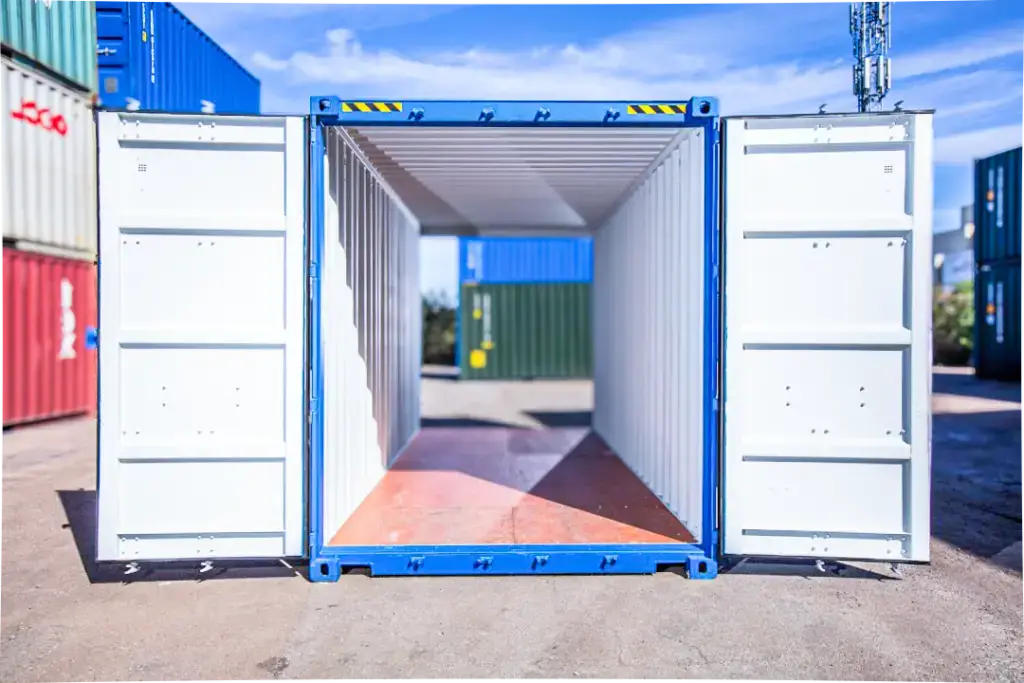
A tunnel container has doors at both ends. That sounds simple because it is simple. It is also incredibly useful. Two sets of doors mean better access, better rotation and far less rummaging around at the back like an archaeologist looking for the missing generator.
Tunnel containers are ideal when goods need to move in and out from either end, when stock must be organised by flow, or when two access points are useful on a busy site. They are particularly handy for construction, events, schools, councils, maintenance teams and businesses dealing with kit that changes hands regularly. They can also be partitioned, creating two separate secure sections within one unit. That gives you flexibility without needing two separate containers and double the space.
A tunnel container is also useful where the site layout is awkward. If a standard container would trap the access doors against a wall, fence, building, loading bay or badly parked van, doors at both ends can save the day. It is the container equivalent of having an exit strategy. Always underrated until you need one.
Best fit: construction sites, tool storage, event equipment, stock rotation, dual-access sites, maintenance depots, schools, sports clubs and businesses needing separate storage zones in one footprint.

When You Need an Open Top Container
Choose an open top container when your goods are too tall, too awkward or too heavy to load through standard doors. Instead of a fixed steel roof, open top containers typically use a removable cover, allowing items to be craned in from above. This makes them ideal for machinery, plant, fabrication, scrap, stone, timber, industrial parts, bulky components and loads that would otherwise require a team of optimistic people and a great deal of shouting.
Open top containers are about loading method. If the easiest, safest or only practical way to load the item is from above, this is the direction to explore. They are particularly relevant where cranes, grabs, loaders or overhead lifting systems are already part of the operation.
The caution is weather and security. Open top units can be covered, but they are not the same proposition as a standard sealed steel roof. You need to think about what is being stored, how long it will remain in the unit, whether it needs to stay dry, and how the load will be secured. Used correctly, open tops are brilliant. Used lazily, they become a large metal confession that nobody thought about the rain.
Best fit: oversized machinery, heavy plant, scrap handling, aggregates, timber, fabrication, construction materials and items requiring crane or overhead loading.
When You Need a Side Opening Container
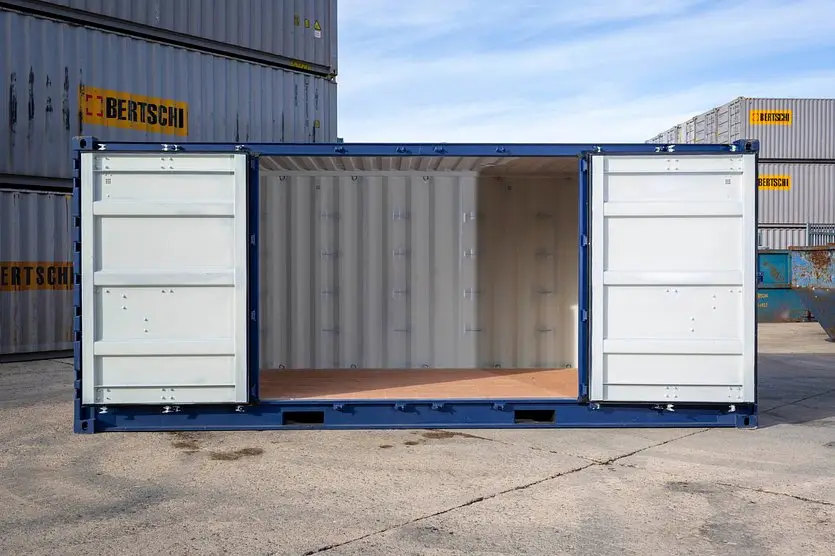
A side opening container gives access along the long side of the unit. This can be a game-changer when goods are wide, palletised, frequently accessed or awkward to load through narrow end doors. Instead of feeding everything in from one end and hoping the thing you need is not trapped behind 37 other things, the side opens up and the container behaves more like a secure, portable warehouse bay.
Side opening containers are excellent for businesses that need regular access to varied stock. They are especially useful for event companies, retail stock, exhibition equipment, manufacturing parts, tools, furniture, grounds maintenance kit and anything where visibility matters. Forklifts can work more efficiently, teams can reach specific items faster, and stock does not need to be packed like a game of industrial Tetris.
The key factor is space. You need enough room beside the container for the side doors to open and for people or equipment to work safely. If the unit will be wedged into a narrow gap between two buildings, a side opening container may be a superb idea in theory and a comedy sketch in practice.
Best fit: frequent-access storage, palletised goods, event stock, retail overflow, manufacturing components, wide items, workshop support and businesses that need visibility across the full container length.
When a High Cube Container Makes More Sense
Sometimes the special requirement is not access, temperature or loading. Sometimes it is height. High cube containers provide extra internal height compared with standard units, which can make a significant difference for taller stock, racking, machinery, plant, office conversions or workshop-style uses.
A high cube is often the sensible middle ground. You may not need a fully bespoke special purpose container. You may just need a bit more breathing room. That extra height can improve storage density, make internal movement more comfortable and allow better use of shelving or racking. It can also support conversion projects where headroom matters.
The decision comes down to what will go inside and how it will be used. If you are storing low-level tools and materials, the extra height may not be worth prioritising. If you are storing tall equipment, building a workspace or trying to make the container feel less like a metal cupboard, it may be exactly the point.
Best fit: tall stock, racked storage, workshops, conversions, plant storage, bulky equipment and projects where internal headroom matters.
When You Need a Small Shipping Container
Not every site needs a 40ft container looming over the place like an industrial whale. Small shipping containers are often the right answer for tight sites, domestic storage, schools, sports clubs, farms, maintenance teams, retail stock, community groups and businesses that need secure storage without swallowing half the car park.
A smaller container can be easier to position, easier to manage and better suited to locations with restricted access. It also avoids the classic problem of buying too much space and then slowly filling it with things nobody can quite explain. Nature abhors a vacuum. So does a business yard. Empty container space will attract mystery items within weeks.
Choose small when the stock volume is modest, the site is restricted, the use is specific, or the container needs to sit neatly beside existing buildings. It is not a compromise if it fits the job. It is just a container with better manners.
Best fit: schools, sports clubs, farms, small businesses, trade storage, domestic projects, restricted sites and local operations needing secure compact storage.

When You Need Bespoke Modification
Sometimes the right container does not exist off the shelf. That is not a failure. That is just business being business. You may need personnel doors, windows, insulation, electrics, lighting, ventilation, shelving, partitions, ramps, roller shutters, lining, flooring upgrades or branding. You may need a workshop, welfare space, kiosk, plant room, control hub, pop-up retail unit, laboratory support space or secure tool store with serious access control.
Bespoke modification makes sense when the container needs to support a process, not just hold objects. The more people interact with the unit, the more important comfort, safety, lighting, access and layout become. A box is fine for materials. A working environment needs more thought.
The danger is over-modifying. Every clever extra should earn its place. A modified container should solve a practical problem, not become a Pinterest board with a lockbox. Start with the workflow, then add the features that support it.
Buy or Hire: The Sensible Question Nobody Wants to Ask
Special purpose containers can often be bought or hired, and the right option depends on duration, budget, certainty and future use. Hiring is usually useful for temporary projects, seasonal peaks, events, trials, emergency storage, construction programmes or businesses that need flexibility. Buying makes sense when the requirement is long-term, repeated, strategically important or likely to be customised.
If the job is short-term, hire keeps things nimble. If the container is going to become part of your operation for years, buying can be more cost-effective and gives you more control. If the unit needs bespoke modification, purchase may be the better route because you are investing in a specific asset. If you are still testing the use case, hiring avoids buying a specialist unit that later becomes the world’s most secure regret.
The decision is not just financial. It is operational. How long is the need? Will the specification change? Is demand seasonal? Do you need immediate availability? Will the site move? Is the container supporting growth, maintenance, compliance or a one-off problem? Answer those questions before getting dazzled by the headline price.
The Quick Decision Guide
- Need controlled temperature? Start with a refrigerated container.
- Need access from both ends? Look at a tunnel container.
- Need crane loading from above? Look at an open top container.
- Need full-width side access? Look at a side opening container.
- Need extra height? Look at a high cube container.
- Need compact secure storage? Look at small shipping containers.
- Need people to work inside it? Consider modification, insulation, lighting, ventilation and access.
- Need it for a short-term project? Consider hire.
- Need it as a long-term operational asset? Consider buying.
- Need something unusual? Speak to a supplier before inventing a solution in your head and then trying to force steel to obey it.
Special Purpose Container Comparison Table
| Container type | Best for | Main advantage | Watch out for |
|---|---|---|---|
| Refrigerated container | Chilled or frozen goods | Temperature-controlled storage | Power supply and door opening frequency |
| Tunnel container | Access from both ends | Stock rotation and split-use storage | Needs clear access at both ends |
| Open top container | Oversized or crane-loaded items | Top loading for awkward goods | Weather protection and load security |
| Side opening container | Frequent access and wide goods | Full-side visibility and loading | Requires side clearance |
| High cube container | Tall stock or conversions | Extra internal height | May not be needed for low-level storage |
| Small container | Restricted sites or compact storage | Secure storage without taking over the site | Limited capacity |
| Modified container | Workspaces or bespoke operations | Designed around your process | Avoid unnecessary extras |
Common Mistakes When Choosing a Special Purpose Container
The first mistake is underestimating access. Many buyers think about what will fit inside, but not how often it needs to come out. A container that is full but awkward is not efficient storage. It is a daily treasure hunt with worse lighting.
The second mistake is forgetting delivery and positioning. A brilliant container in the wrong place is still wrong. You need to consider ground conditions, lorry access, turning space, door swing, drainage, power supply, ventilation and future collection. The container does not magically teleport into position, despite what some project plans seem to suggest.
The third mistake is buying for today only. A container should solve the immediate problem, but it should also leave enough flexibility for tomorrow. If growth is likely, choose a unit that can handle it. If the site may change, hire might be smarter. If the use will evolve, consider access and modification options early.
The fourth mistake is assuming all containers are equal. Condition, specification, door type, seals, flooring, ventilation, insulation, electrical requirements and previous use all matter. A cheap container is only cheap if it does the job properly. Otherwise, it is a metal invoice with rust included.
Case Study: A Farm Shop That Chose the Right Container Twice
Imagine a growing farm shop with three problems arriving at once: chilled produce demand is rising, event stock is cluttering the barn, and seasonal displays need faster access at weekends. The first instinct is to buy one large standard container and “make it work”. This is the traditional British method: under-specify the tool, overwork the staff, then blame the weather.
Instead, the business maps the jobs separately. Fresh produce needs stable chilled storage close to the packing area. Event gazebos, signs, tables and point-of-sale kit need frequent access, often by different team members. Seasonal stock needs to be visible and easy to reach, not buried behind spare fencing and a suspicious quantity of compost bags.
The right answer is not one container. It is two different containers doing two different jobs. A refrigerated container supports chilled produce during peak harvest and weekend trading. This reduces pressure on the existing cold room and gives the team more control during warm weather. A side opening container handles events and seasonal stock, because the team can open the side, see everything, load quickly and avoid dragging half the contents out to reach one trestle table.
The result is not glamorous. Nobody writes poetry about improved access to branded bunting. But operations improve immediately. The packing team stops fighting for cold space. Weekend staff can find what they need. Stock is not damaged by being stacked badly. The yard is tidier. The business can scale seasonal trading without building permanent space it may not need all year.
That is the real value of special purpose containers. They are not special because they look different. They are special because they match the work. When the unit supports the workflow, the container becomes part of the business rather than another thing in the way.
Final Thoughts: Choose the Container That Removes the Most Friction
The right special purpose container is rarely the flashiest option. It is the one that saves time, protects stock, improves access, supports safe loading and fits the site without drama. That could mean a refrigerated container, tunnel container, open top container, side opening container, high cube, small container or modified unit. The category matters, but the job matters more.
Before choosing, be honest about how the container will be used on a wet Tuesday afternoon by real people trying to get real work done. That is where good decisions live. Not in the brochure. Not in the fantasy version where everything is loaded perfectly once and never touched again. In the messy, practical, moving-pallets-and-finding-the-right-kit reality of daily operations.
Choose around that reality and the container will earn its keep. Choose around a vague guess and you may still get a very strong box. Just not the right one.
Need help choosing the right special purpose container? Speak to Cubus Containers about refrigerated containers, tunnel containers, open top containers, side opening containers and bespoke container options for sale or hire across the UK.