Main keyword:
What happens when a shipping container stops being “just a box” and starts behaving like a bridge, a gallery, a viewing platform, a pop-up market, a studio, a community venue or, frankly, a bit of architectural mischief with a steel skeleton?
“A shipping container is not a compromise when the brief is clever. It is a shortcut to usefulness, visibility and serious creative potential.”
Introduction
Shipping containers have a reputation problem. To some people, they are still just big metal rectangles used for storage, site equipment and the occasional “I’ll sort that garage out one day” family lie. Useful? Yes. Glamorous? Not usually. But across the UK, containers have been quietly moonlighting as some of the most flexible building blocks in public space, community design and creative regeneration.
The interesting part is not simply that containers are strong, stackable and relatively quick to deploy. That bit is well known. The real story is what happens when a practical object is given a better brief. A 20ft or 40ft container can become a bridge walkway support, a café viewing platform, a roaming public art installation, an artist studio, a start-up incubator, a market stall, a temporary gallery, a school facility or a sculpture that makes people stop scrolling and actually look up. Miraculous, really.
For councils, developers, architects, community groups, farms, event organisers and businesses, the lesson is simple: the container is not the idea. It is the structure that lets the idea happen faster, more affordably and with less faff than many traditional builds. It will not magically solve planning, access, insulation, fire safety or structural design. Sadly, steel boxes do not come with a fairy godmother. But when specified properly, they can turn awkward spaces into useful, visible, high-impact places.
Why UK Container Projects Are Getting More Interesting
The UK has a gift for awkward spaces. Former industrial sites, underused car parks, dead corners beside stations, redundant yards, derelict urban plots, festival fields, waterfront edges and those mysterious strips of land that nobody quite owns emotionally. Traditional construction can make these spaces feel impossible: too expensive, too slow, too permanent, too risky or too wrapped in paperwork to be worth the bother.
Containers sit neatly in that gap. They are pre-existing steel structures with predictable dimensions, strong corner castings and a modular logic that designers can work with. They can be delivered, positioned, stacked, modified, removed, relocated or reused. That does not mean “planning permission? never heard of her”. It means the conversation starts from a more flexible place.
This flexibility matters because many of the best UK container projects are not forever buildings. They are meanwhile-use projects, trial spaces, creative interventions or public realm improvements designed to prove an idea before committing to a permanent structure. In a country where committees can spend three years deciding the colour of a bench, that ability to test, learn and adapt is not a small advantage.
Containers also have a built-in visual honesty. Everyone knows what they are. When used badly, that can look lazy: a rusty metal shoebox dumped in a corner and called “innovation” by someone wearing black-framed glasses. When used well, the industrial character becomes part of the charm. Paint it, clad it, cut it, light it, landscape around it, commission artists to work with it, and suddenly the same object becomes a landmark.
Bridge Walkways and Viewing Platforms: Containers With a Better View
One of the more unexpected container uses is in and around bridge structures. A strong steel module can be adapted into a café, office, bike store, viewing point or support space that works with a pedestrian bridge rather than pretending to be a conventional building. A notable UK example is the Olympic Park bridge project, where shipping containers were used as part of a bridge and café/viewing platform scheme, with additional container structures placed beneath for a bike shed and office. The units were painted bright yellow, because apparently subtlety had the day off, and the result became both functional and visually memorable.
This sort of project shows why containers are useful in public infrastructure settings. They can deliver enclosure, storage, shelter and commercial space while fitting into constrained locations. Around bridges, station routes, public walkways and event sites, space is often tight, delivery windows are awkward, and the design needs to be robust enough to cope with footfall, weather and the general British habit of leaning on things while eating chips.
For businesses and public bodies, the appeal is not just novelty. A container-based bridge walkway project can add value to a site by combining movement and destination. A walkway gets people from A to B. A viewing platform, kiosk, café, ticket point, studio or pop-up space gives them a reason to pause. That pause is commercial, cultural and social value in one neat metal rectangle.
Of course, anything involving public access and bridge structures needs proper structural engineering. Containers are strong in specific ways, especially through their corner posts and frame, but cutting large openings, stacking, loading or connecting them to other structures changes the behaviour of the box. This is where the fantasy Pinterest board has to meet the structural engineer. Yes, terribly inconvenient. Also essential.
Public Art Installations: When the Box Becomes the Canvas
Containers make brilliant public art surfaces because they are instantly recognisable and unapologetically physical. They are not delicate. They do not whisper. Put one in a public space and people notice it, even before an artist has gone anywhere near it. That makes them ideal for murals, sculptural installations, touring exhibitions and creative commissions.
Across the UK, container art has moved beyond simply painting a logo on the side and hoping nobody notices the rust. Public art projects use containers as canvases, stages, galleries, shelters and mobile cultural objects. One example is Artist Hive Studios’ bright pink roaming art installation in Canterbury, created by respraying a shipping container into a deliberately loud, mobile artwork. It is the kind of project that proves visibility is not a side effect. It is the point.
At Trinity Buoy Wharf in London, Container City demonstrated how stacked, colourfully finished containers could create affordable workspace and residential units with an unmistakable visual identity. The result is less “temporary shed” and more “industrial Lego grew up, got planning advice and developed a personality”. Its long-running presence has made it one of the UK’s most referenced container architecture examples.
Public art containers work especially well because they can travel. A mural on a wall belongs to that wall. A container can belong to a neighbourhood today, a festival next month and a regeneration project after that. It can carry an exhibition, host workshops, collect community stories or simply turn a blank site into something people photograph, share and remember. In place-making terms, that is powerful.
Creative Hubs, Markets and Community Venues
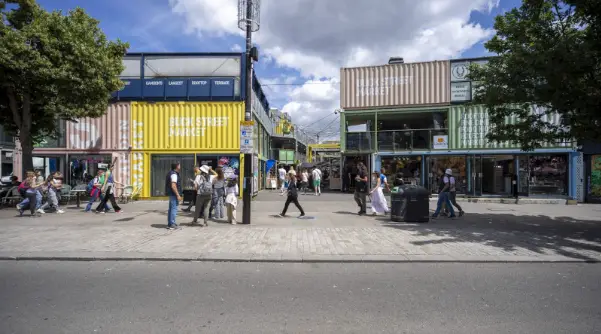
Some of the strongest UK container projects are not single objects but clusters. Stack multiple containers together, add walkways, signage, services, lighting, decking and a proper management plan, and you can create a working micro-neighbourhood. Food traders, independent retailers, studios, workshops, social enterprises and event spaces can share one compact site.
SPARK York is a useful example. It transformed an unused city-centre site into a community venue using recycled shipping containers and timber structures. Its own purpose statement describes a place that includes food, drink, creative workspace, artist studios and event space, while noting that dozens of businesses have started there. That is the magic of a container hub: it lowers the barrier between “I have an idea” and “I have a place to trade”.
The lesson for UK towns is obvious. Empty plots are not neutral. They drag down a street, signal neglect and give local Facebook groups something else to be furious about. A container-based meanwhile project can activate the site quickly, create footfall and support small businesses without waiting for a permanent development to arrive on a white horse.
These projects still need proper thinking. Drainage, power, water, waste, accessibility, toilets, fire routes, acoustic control, opening hours, resident relations and maintenance all matter. The romantic version says “just drop in some containers and create a vibe”. The real version says “create a serviced, compliant, commercially viable place that happens to use containers”. Vibes are lovely. Vibes do not pass fire strategy.
Galleries, Studios and Cultural Spaces
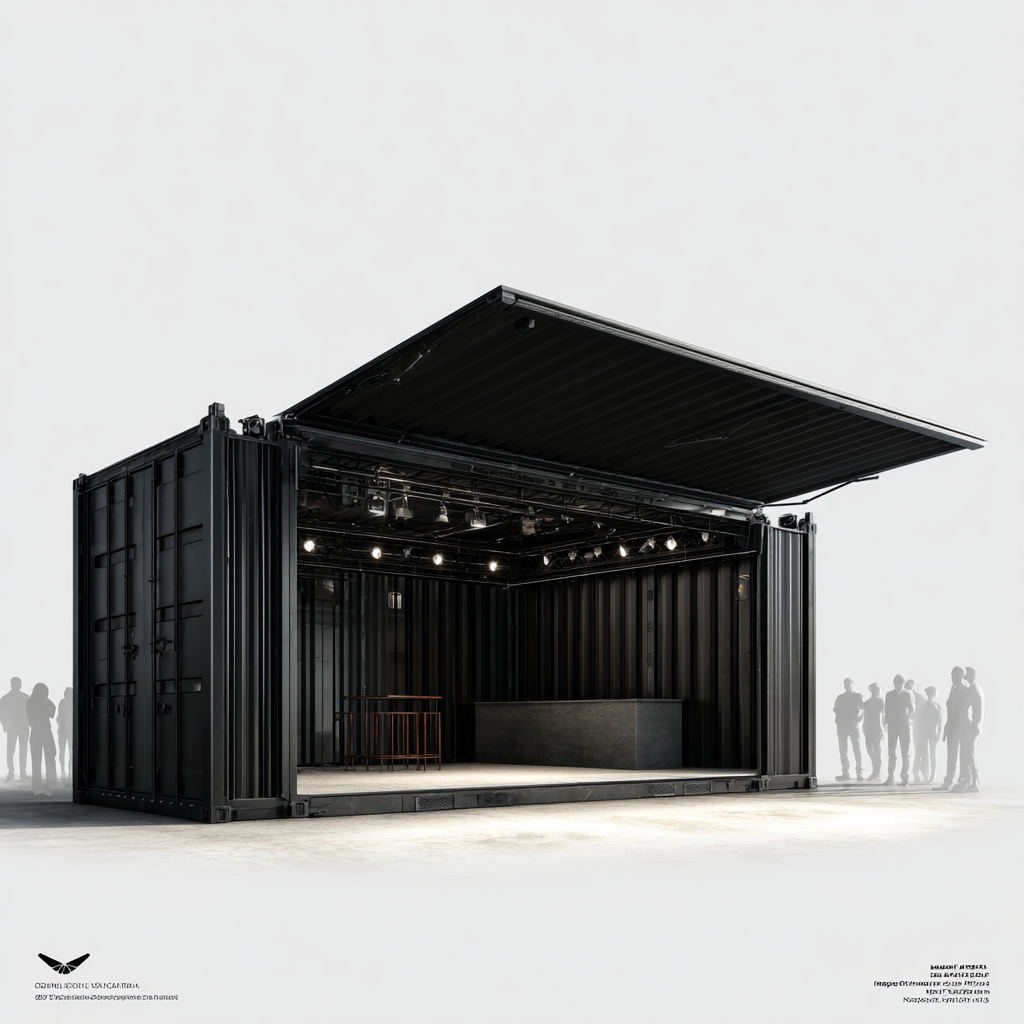
Containers are particularly well suited to cultural uses because artists and creative organisations often need affordable, adaptable space more than polished perfection. A container can become a studio, black-box gallery, pop-up cinema, workshop room, print space, storage hub or exhibition pod. It can be basic or beautifully finished, depending on budget and use.
Contains Art in Watchet is a strong example of container-led cultural growth. The organisation began with three shipping containers converted by local volunteers into a gallery and artist studios. That modest steel starting point helped build an audience, support artists and develop a programme that later grew into a more substantial cultural presence. In other words, the containers were not the final ambition. They were the launch pad.
This is where containers become genuinely strategic. They allow organisations to start before everything is perfect. They create a visible base, help test demand, attract volunteers, host events and generate proof. Funders, councils and partners are often more comfortable backing an idea once they can see it working in the real world. A container can provide that first tangible proof, which is considerably better than another PDF full of “stakeholder aspirations”.
What Makes a Container Suitable for a Creative Project?
Not every container is suitable for every project. That sentence sounds obvious, but the internet is a museum of people ignoring obvious things with astonishing confidence. A unit intended for secure storage is not automatically ready to become a public-facing gallery, classroom, café or viewing platform. The more people interact with it, the more carefully it needs to be specified.
For a public or creative project, the starting point is usually condition. Wind and watertight units may be suitable for basic storage or low-risk uses, but projects involving customers, visitors, staff or equipment often need higher-grade units or fully modified containers. Doors, windows, insulation, ventilation, heating, cooling, electrics, lighting, flooring, ramps and finishes all need to be considered.
Then comes structure. Cutting openings into the sides or ends changes the load path. Stacking containers requires correct support through the corner posts. Walkways, balconies, roof terraces, canopies and bridges all add loading considerations. A competent supplier and structural engineer should be involved early, not invited at the end like a disappointed adult at a teenage party.
The best projects also consider the visitor experience. How does the container look from the street? Is the entrance obvious? Is it accessible? Is it warm in winter and tolerable in summer? Does it feel safe? Does lighting help it become a destination after dark? Does the project look intentional, or does it look as though someone abandoned a container and then invented a story?
Planning, Permissions and the Boring Bit That Saves the Project
Planning rules depend on location, permanence and use. A temporary container used for a short project may be treated differently from a container adapted into a public venue, workspace, café or permanent installation. The Planning Portal advises that some temporary buildings related to existing buildings or structures may fall under permitted development if they meet specific criteria, but it also points people back to the local planning authority. Translation: ask before you start welding dreams to reality.
For public-facing projects, planning is only one layer. Building Regulations, fire safety, access, highways, environmental health, licensing, insurance and landowner consent may all become relevant. Food and drink uses bring more requirements. Public art in a highway or public realm setting may need permissions around installation, maintenance, sightlines and safety. Anything that invites the public in must be treated as a public environment, not a glorified shed with optimism.
This should not put people off. It should make them plan properly. The successful projects are not the ones that dodge the boring bits. They are the ones that handle them early, cleanly and professionally. That is what separates an admired container project from a local newspaper headline featuring the words “ordered to remove”.
Where Unexpected Container Projects Work Best
- Town centres with vacant plots that need footfall before long-term redevelopment begins.
- Waterfronts, parks and visitor attractions needing cafés, kiosks, ticketing or exhibition pods.
- Schools, colleges and universities needing studios, labs, workshops or temporary teaching space.
- Construction and infrastructure sites that need offices, welfare space, viewing decks or public engagement hubs.
- Art festivals, cultural trails and regeneration areas looking for visible, movable installations.
- Farms and rural estates needing farm shops, education rooms, indoor growing spaces or rainwater projects.
- Sports clubs and community groups needing changing rooms, storage, bars, classrooms or event space.
Case Study: From Dead Space to Destination — A Container Creative Quarter
Imagine a tired edge-of-town car park beside a railway arch. The site is too small and awkward for a traditional development right now, but too visible to ignore. It attracts litter, dead footfall and the sort of energy that makes people say “this area has potential”, which is estate-agent language for “please use your imagination because the current reality is doing us no favours”.
A container-led project could transform that site in phases. Phase one might use two 20ft containers: one as a coffee kiosk and one as a secure store and workshop. Add planters, seating, lighting and a mural commission on the street-facing elevation. Suddenly the site has activity, colour and a reason to stop. It is not finished, but it is alive.
Phase two could add a 40ft container converted into a gallery and workshop space, with insulation, electrics, glazed doors, accessible ramping and a small deck. Local artists could run weekend sessions. Schools could visit. A small business market could operate monthly. The container is not pretending to be the Tate. It is doing something arguably more useful: making culture local, visible and practical.
Phase three might stack or arrange additional units to create studios for makers, independent retailers and start-ups. A small stage or event wall could be built into the layout. The site could host food traders, community events, talks, exhibitions and seasonal markets. Over time, the containers become a proof-of-demand engine. The landowner sees footfall. The council sees community value. Traders see a route into premises. Residents see a formerly dead space becoming somewhere worth using.
The beauty is that the project remains adaptable. If the long-term development begins, the containers can be moved, sold, stored or reused elsewhere. If the creative quarter thrives, it can be upgraded. If a use fails, the unit can be refitted. This is the understated genius of containers: they let a place experiment without pouring every decision into concrete.
Practical Checklist for a UK Container Project
- Define the purpose first: storage, public art, café, studio, workspace, viewing platform or mixed use.
- Choose the right size and condition of container for the intended level of finish and public interaction.
- Check planning, landowner consent, access, highways, fire safety and Building Regulations early.
- Bring in structural advice before cutting openings, stacking units or adding bridges, decks or roof loads.
- Plan services properly: power, water, drainage, heating, cooling, data, lighting and security.
- Design for people, not just photographs: accessibility, wayfinding, comfort and safety matter.
- Use paint, cladding, signage, planting and lighting to make the unit feel intentional, not dumped.
- Think about reuse from day one so the project has a second life if the site changes.
Final Thoughts
Unexpected UK container projects work because they combine practicality with theatre. They are strong enough to be useful, flexible enough to be creative and recognisable enough to get attention. A container can be a bridge-side café, a public artwork, a market stall, a gallery, a workspace, a community venue or the starting point for an entire meanwhile-use strategy.
The mistake is thinking the container itself is the clever bit. It is not. The clever bit is the brief. The container simply gives that brief a fast, robust and adaptable structure. Specify it properly and it can make a neglected site feel alive. Treat it like a cheap shortcut and, well, it will look like one. The box may be simple. The thinking should not be.
“The most unexpected container projects are not about hiding the box. They are about giving the box a job worth noticing.”
Planning a creative, commercial or community container project? Speak to Cubus Containers about choosing the right unit, understanding modification options and turning a practical steel structure into something people actually want to use, visit and remember.